Diabetes is when your body either can’t produce enough insulin, or can’t use the insulin it produces properly, so glucose builds up in your blood instead of moving into your cells for energy. That’s the medical answer. But if you’re actually living with it, the real answer feels a lot bigger than that one sentence.
It’s the fasting blood test you dread. The mithai you eye at a wedding and then quietly decline. The quiet fear of what happens ten years from now if the numbers don’t improve. Understanding what’s actually happening in your body is usually the first step toward feeling less anxious about it, not more.
What Is Diabetes, Really
There are two main types. Type 1 is where the body stops producing insulin altogether, usually starting in childhood, and it needs lifelong insulin treatment. Type 2 is where the body still makes insulin but stops using it efficiently, a condition called insulin resistance, and it’s the type overwhelmingly linked to diet, weight, and lifestyle.
Type 2 is also the one growing fastest in India, and it’s the one most people mean when they say “sugar” in casual conversation. Ayurveda has its own name for this condition, Madhumeha, literally “sweet urine,” a term that appears in Ayurvedic texts long before glucose meters existed.
The Scale Of The Problem In India
This isn’t a rare condition anymore. It’s one of the defining health crises of this decade in India, and the numbers back that up clearly.
| What the data shows | Figure |
|---|---|
| Indians currently living with diabetes | Over 101 million, per ICMR INDIAB |
| Indians projected to eventually develop diabetes | 1 in 4, ICMR INDIAB, January 2026 |
| Indians currently affected by prediabetes | 15.3% of the population |
| Projected diabetics in India by 2045 | Around 124.9 million |
That means diabetes, or the very real risk of it, touches nearly every household in the country in some form. Early action, catching it at the prediabetes stage rather than after years of unmanaged blood sugar, makes a genuine difference to long term outcomes.
How Ayurvedic Treatment Approaches Diabetes Differently
Ayurvedic treatment for diabetes doesn’t try to force a number down within hours the way insulin does. It works on the underlying digestive and metabolic function, the idea being that better digestion and metabolism naturally lead to steadier glucose response over weeks, not minutes.
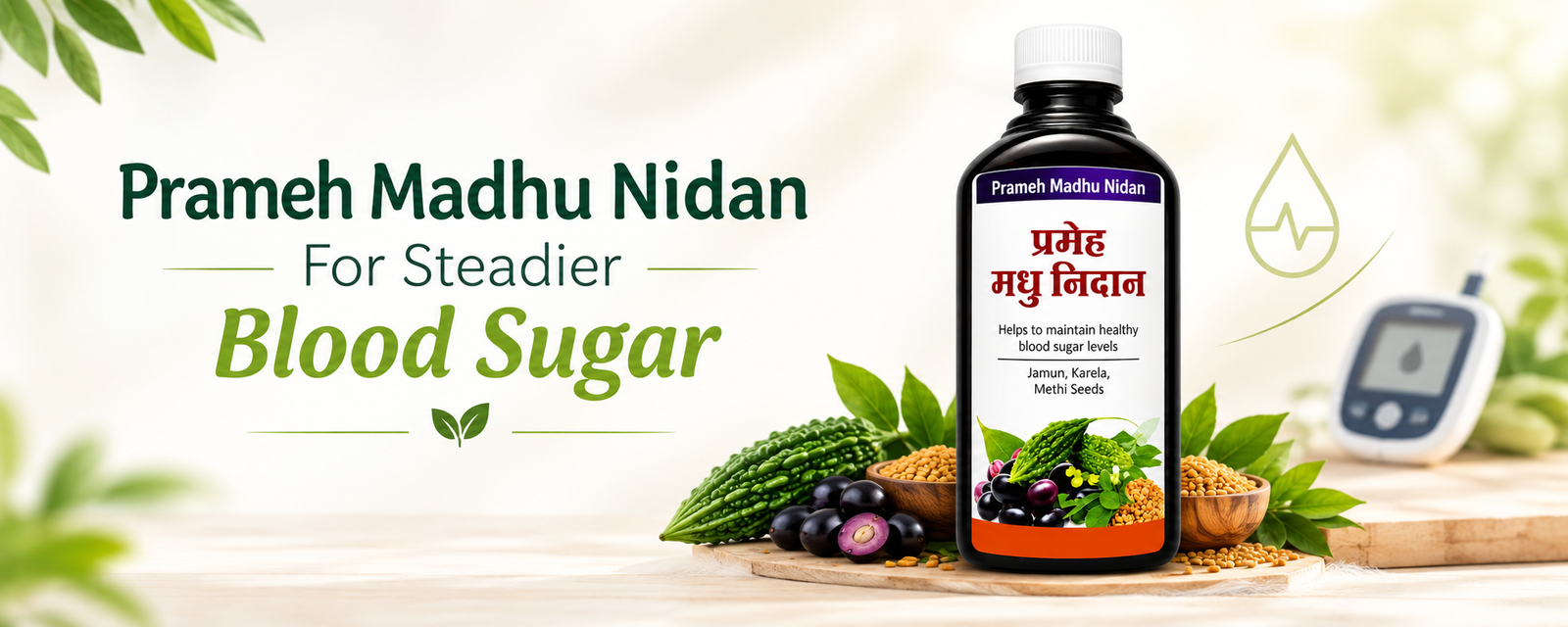
Three herbs form the backbone of most Ayurvedic diabetes formulas. Jamun supports how the body handles glucose after meals. Karela plays a role in supporting insulin activity, which is likely why it’s shown up in Indian kitchens for this exact purpose for generations. Methi seeds support digestion and metabolism as a daily habit rather than a one time remedy.
Prameh Madhu Nidan brings all three together in a sugar free liquid formula, taken 10 to 20 ml with a cup or two of water, twice a day. Most people notice small shifts, better digestion, steadier energy, within two to three weeks, with fuller benefits building over six to eight weeks of consistent use.
Using Ayurvedic Treatment Alongside Your Doctor, Not Instead Of Them
This is the part that genuinely matters. Ayurvedic treatment for diabetes works best as a support system alongside prescribed medication and regular checkups, not as a replacement for either.
If you’re on diabetes or blood pressure medication, leave a gap of 30 to 60 minutes between your medicine and any herbal dose where possible, and tell your doctor what you’re taking. Herbal formulas can genuinely interact with certain prescription drugs, and your doctor needs the full picture to manage your care properly.
If you or someone in your family has just been told their fasting glucose is creeping up, don’t panic and don’t wait either. Get a proper diagnosis, start a consistent daily routine, walking, meal timing, and a sugar free herbal support formula like Prameh Madhu Nidan, and give it a genuine eight weeks before judging whether it’s helping.
Were you or someone close to you surprised by a diabetes diagnosis, or did you see it coming for years first? Share your experience in the comments, it might help someone else reading this today.