
Ask your grandparents what they took for a stomach upset, a cold, or low energy, and chances are the answer wasn’t a tablet from a strip. It was something from the kitchen, a herb, a decoction, a home remedy passed down without anyone ever writing it in a textbook.
Somewhere between then and now, a lot of that knowledge got quietly pushed aside, replaced by faster options that promise instant results. And yet here we are, watching an entire generation slowly walk back toward the same traditional medicine their grandparents trusted. That’s not a coincidence. It’s a response to something that isn’t working.
The Problem Modern Healthcare Alone Can’t Solve
Modern medicine is extraordinary at emergencies. A heart attack, a broken bone, a serious infection, there’s no substitute for fast, precise intervention. Nobody is arguing against that.
But the health problems most Indian families deal with day to day aren’t emergencies. They’re slow, chronic, lifestyle driven conditions, blood sugar that keeps creeping up, a liver that’s quietly under strain, energy that never quite comes back after a long week. These conditions don’t respond well to a single fast fix. They build up over years, and they need something that addresses the years, not just the day you finally went to the doctor.
What Makes Ayurveda Genuinely Important, Not Just Nostalgic
Ayurveda’s real value isn’t that it’s old. It’s that it treats the body as one connected system instead of a collection of separate symptoms. Poor digestion, low energy, and fluctuating blood sugar are rarely unrelated in Ayurvedic thinking, they’re usually the same underlying imbalance showing up in different places.
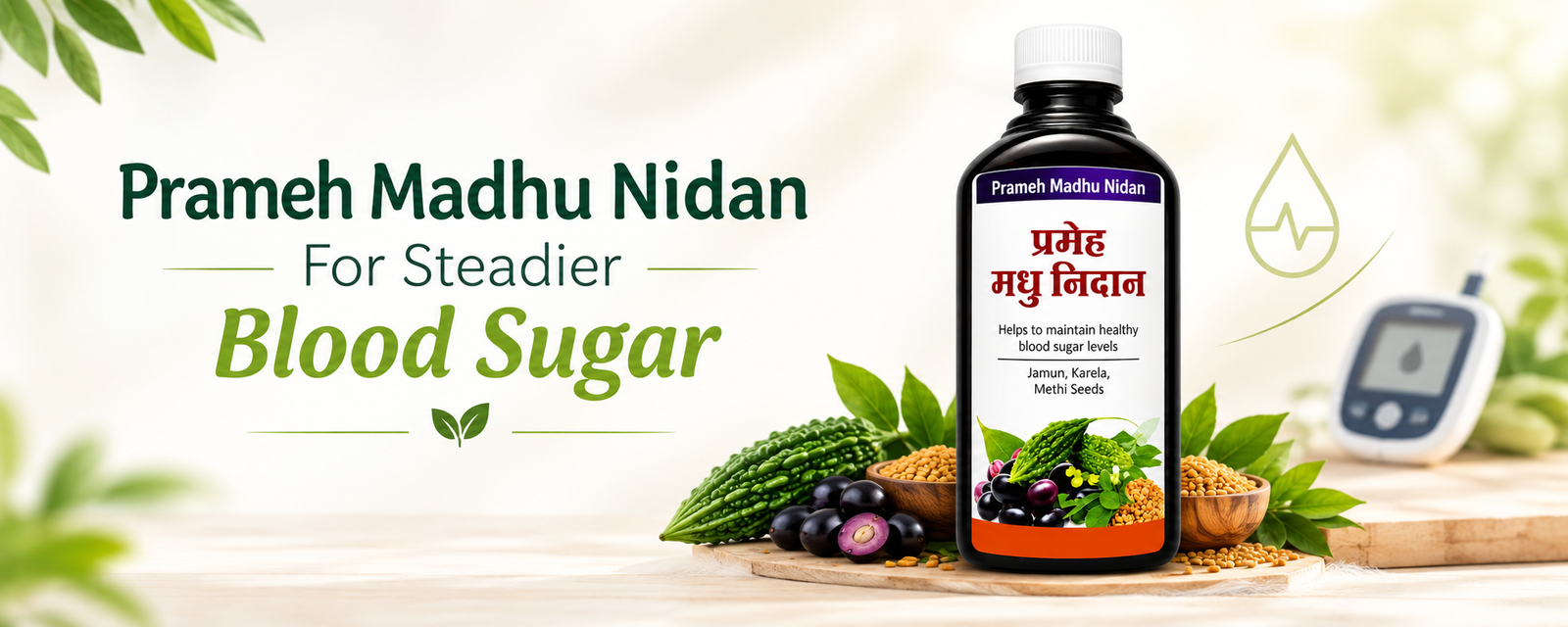
That’s why Ayurvedic formulations tend to combine several herbs working together, Punarnava and Makoya for the liver, Jamun, Karela and Methi for blood sugar, rather than isolating one active compound and calling it a day. The goal isn’t to silence a symptom. It’s to help the system that produced the symptom work properly again.
The Numbers Behind India’s Return To Ayurveda
This return to traditional medicine isn’t a small trend confined to wellness influencers. It’s showing up at a national scale, backed by real investment and real usage numbers.
| What’s driving the shift | The data |
|---|---|
| India’s Ayurvedic products market, 2025 | INR 1,017.51 billion, growing at 15.52% a year to 2034 |
| India’s full AYUSH industry, 2026 | Rs 2.33 lakh crore, projected to cross Rs 3.37 lakh crore by 2031 |
| Indians using an AYUSH system in the past year | 53% urban, 46% rural households |
| Fatty liver now affecting Indians | An estimated 120 million people, 16 to 32% of the population |
Look at that last row again. A condition most people have never even been screened for is already affecting a huge share of the country. That’s exactly the kind of slow, silent problem Ayurveda was built to address early, before it becomes a hospital admission.
How To Actually Use Ayurveda In A Modern Life
Nobody’s suggesting you abandon your doctor or stop taking prescribed medication. The smarter approach is using both together, allopathy for fast, targeted problems, Ayurveda for the slow, systemic ones that build up over years.
Bhumia Ayurved was built around exactly that idea, three focused formulas, no padding, no added sugar, each addressing one real, common problem. Liver support through Punarnava Makoya Ras, blood sugar balance through Prameh Madhu Nidan, and stamina support through Pure Shilajit in resin form. Nothing sold on hype, everything traceable back to a certified manufacturing unit.
If you’re only starting to take Ayurveda seriously now, don’t try to fix everything at once. Pick the one area quietly bothering you the most, liver, blood sugar, or energy, and give a well made, sugar free formulation a genuine eight week run alongside your existing routine. That’s usually enough time to actually feel the difference, not just read about it.
Did your family already use home remedies for things doctors now write prescriptions for? What’s the one your household still swears by? Tell us in the comments, we’d love to hear it.